Weight loss, your face and your hairline

Weight loss can change the shape of your face as well as your body. As facial fullness reduces, your cheekbones and jawline may become more defined, giving your face a slimmer, more angular appearance.
But some people using weight-loss injections also notice their hair becoming thinner. Hair loss is a recognised side effect of medicines such as Mounjaro and Wegovy, although this does not necessarily mean the medicine is directly damaging the hair follicles. In clinical trials, most affected patients recovered while continuing treatment. (medicines.org.uk, medicines.org.uk)

Significant weight loss can itself disrupt the hair’s growth cycle, triggering temporary shedding called telogen effluvium. This often becomes noticeable around three months after the trigger: more hair comes out when washing or brushing, the ponytail feels smaller, or the scalp becomes easier to see. Restricted nutrition can also contribute, so adequate nourishment matters during weight loss. Shedding usually settles, but recovering the previous fullness can take many months. (skinhealthinfo.org.uk)
These changes can affect how your face is framed. As your face becomes slimmer, thinning hair or an existing receding hairline may make your features appear sharper. Less hair around the temples and forehead can leave the face looking more exposed and less softly framed.
You may welcome your weight loss but feel that your hair no longer complements your changing appearance.

Where does a hair transplant fit in?
The first step is understanding the cause. Temporary shedding usually recovers without surgery. It can also reveal underlying male or female pattern hair loss that was previously less noticeable. New or persistent shedding should be discussed with your GP or prescriber. (skinhealthinfo.org.uk)
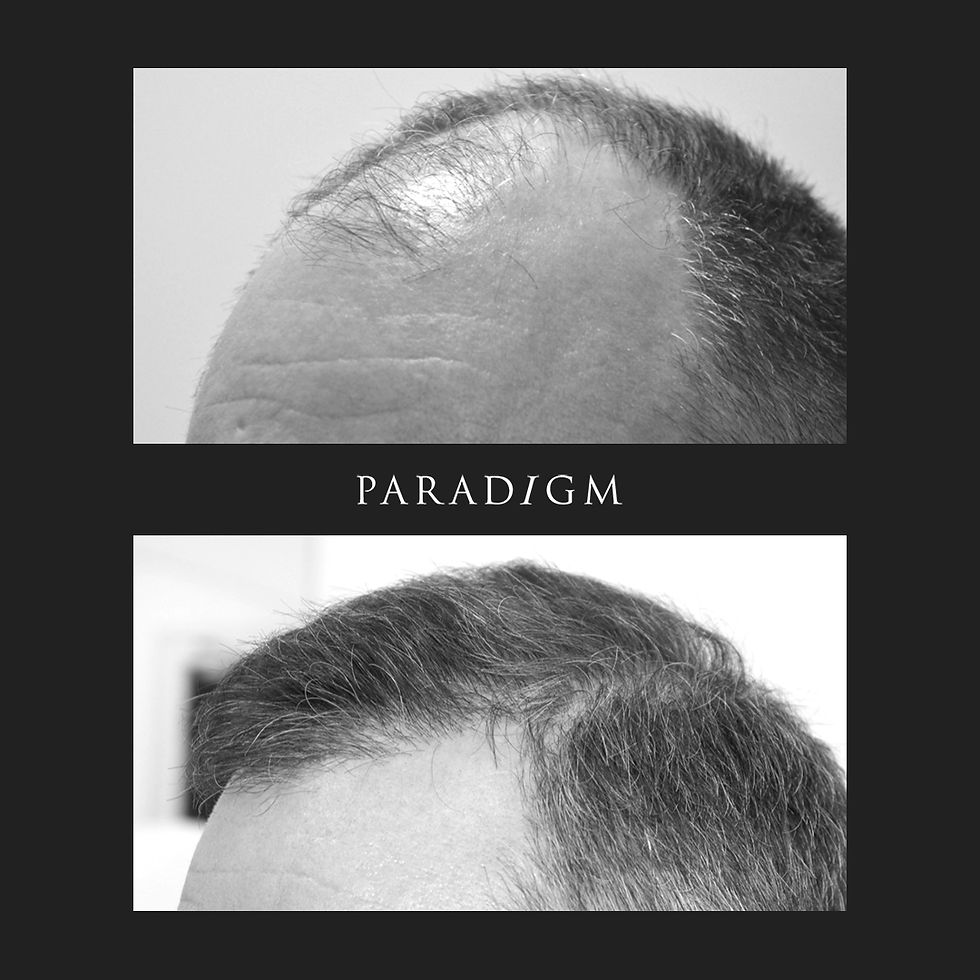
For suitable patients with established pattern hair loss, a carefully designed transplant can restore facial framing and soften the outline around the forehead and temples. Suitability and timing depend on a clinical assessment, particularly if shedding is still active.
At Paradigm Clinic, hair restoration is designed around you—your features, your hair and how you want to look. Book a consultation to understand your hair loss and explore your options.